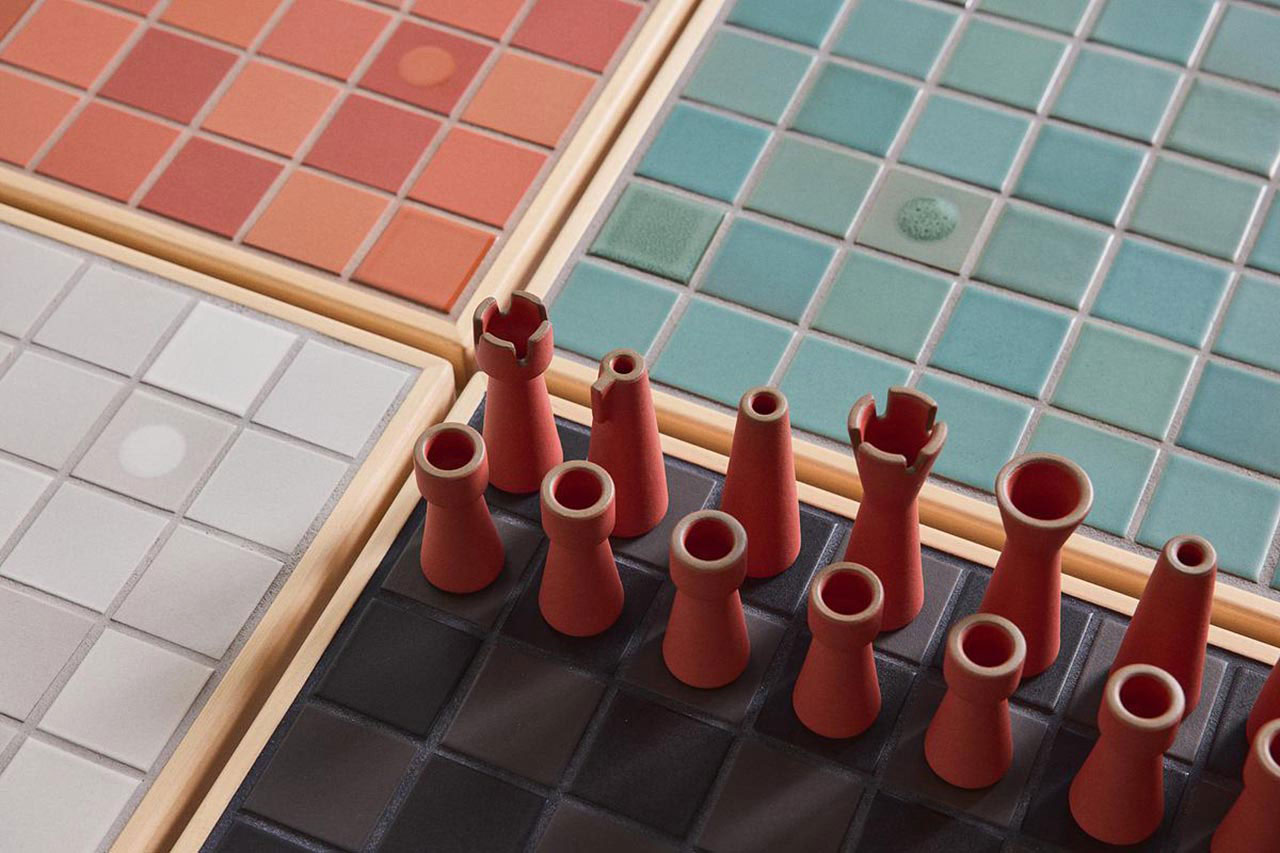
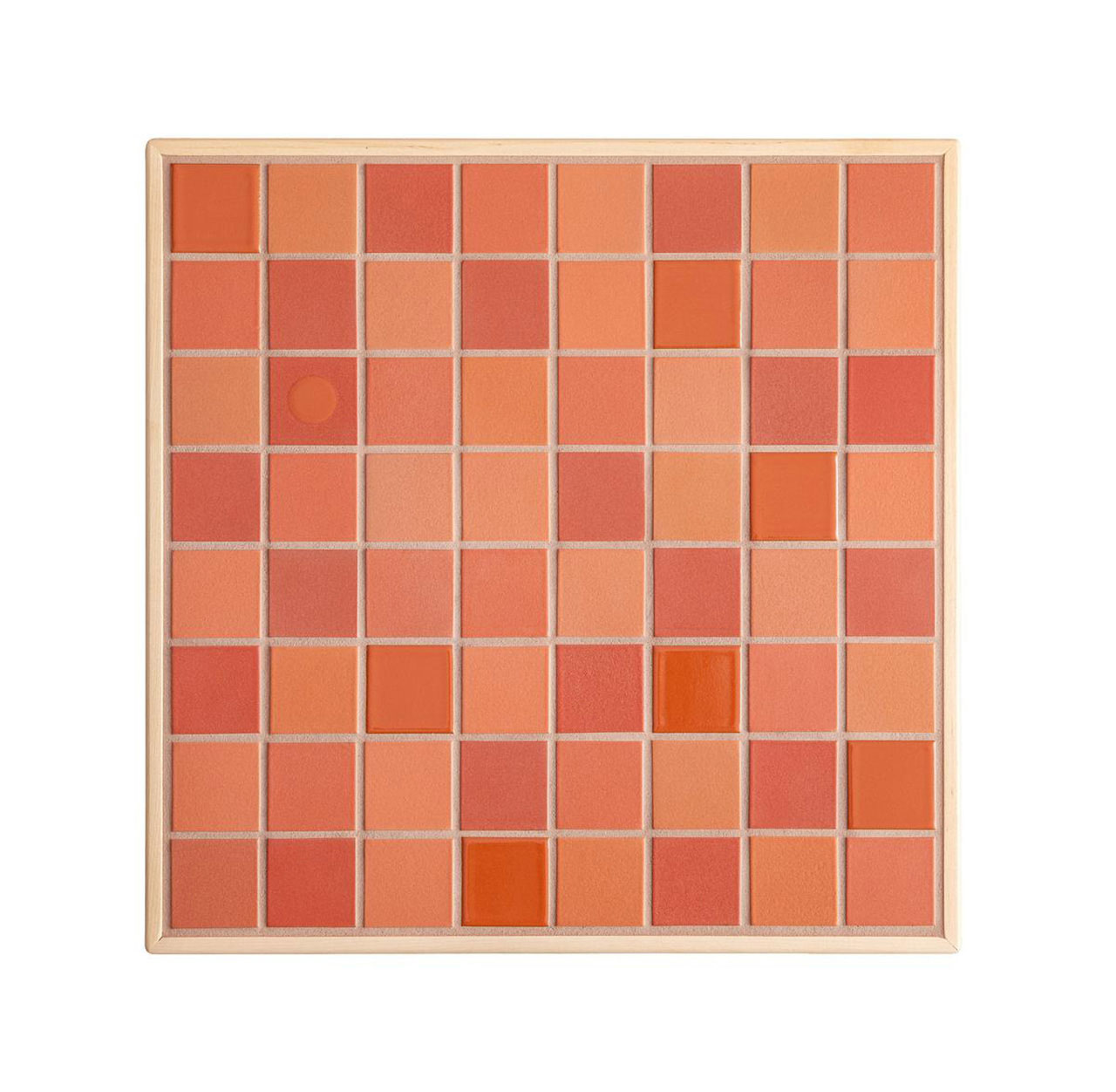
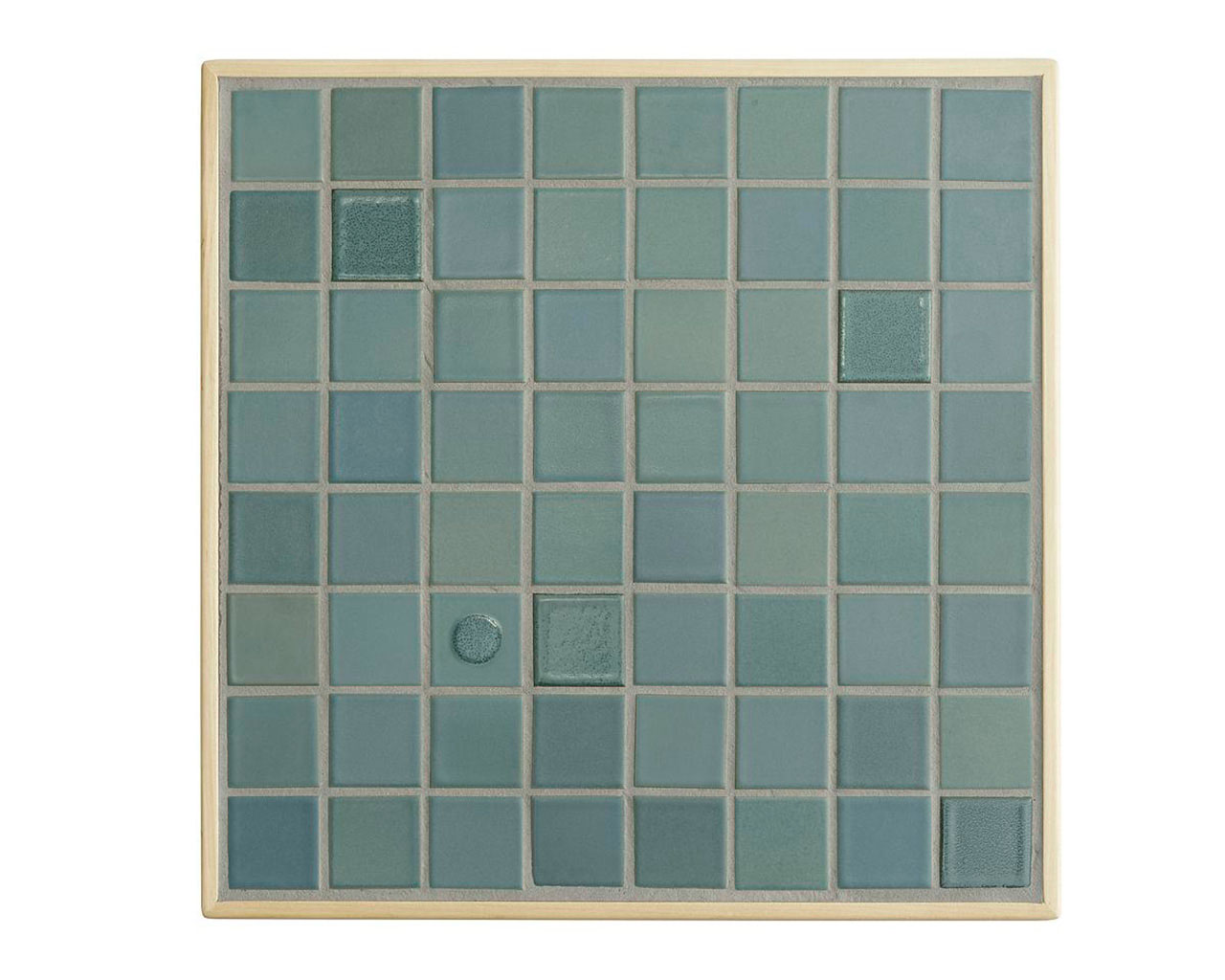
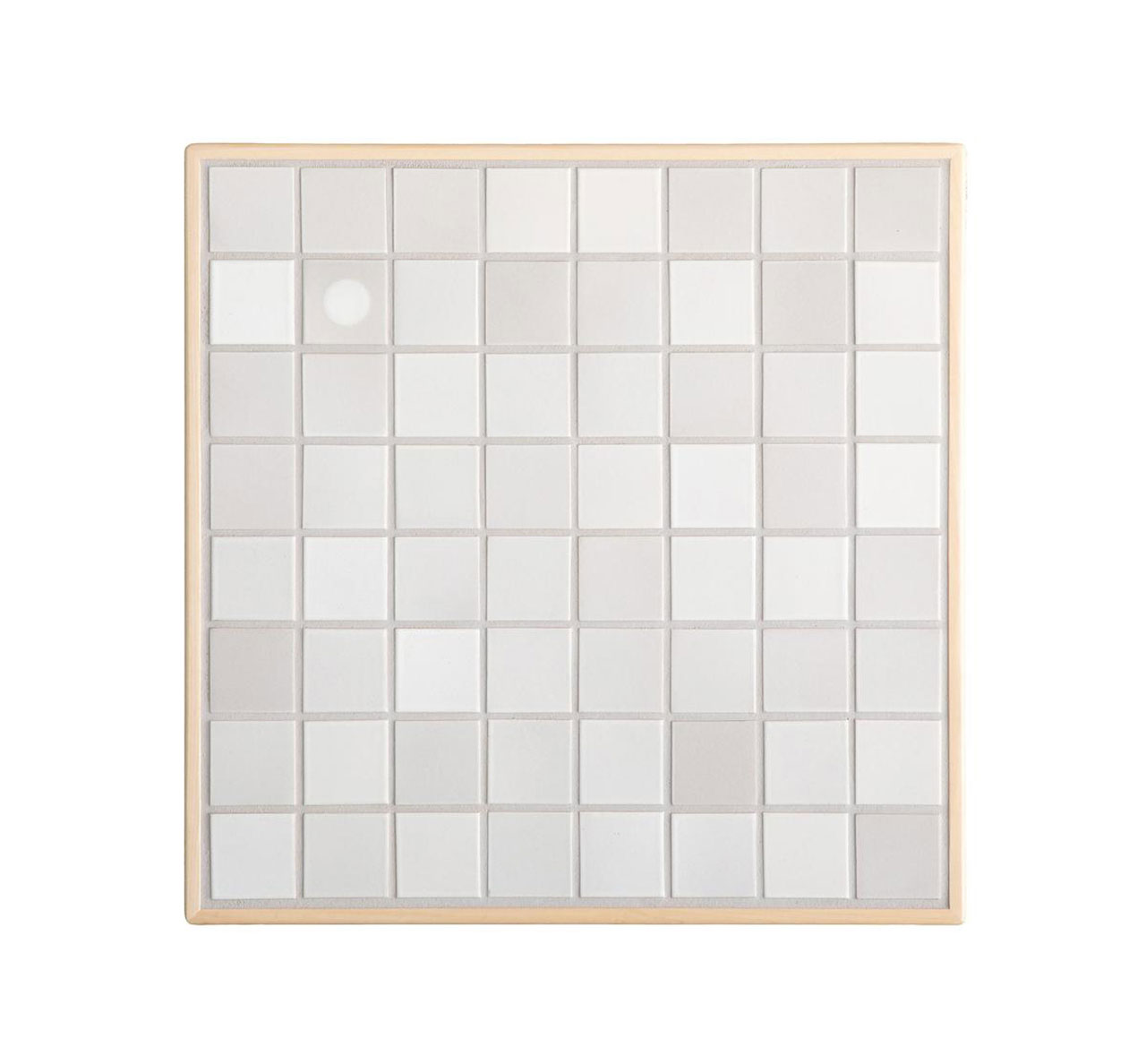
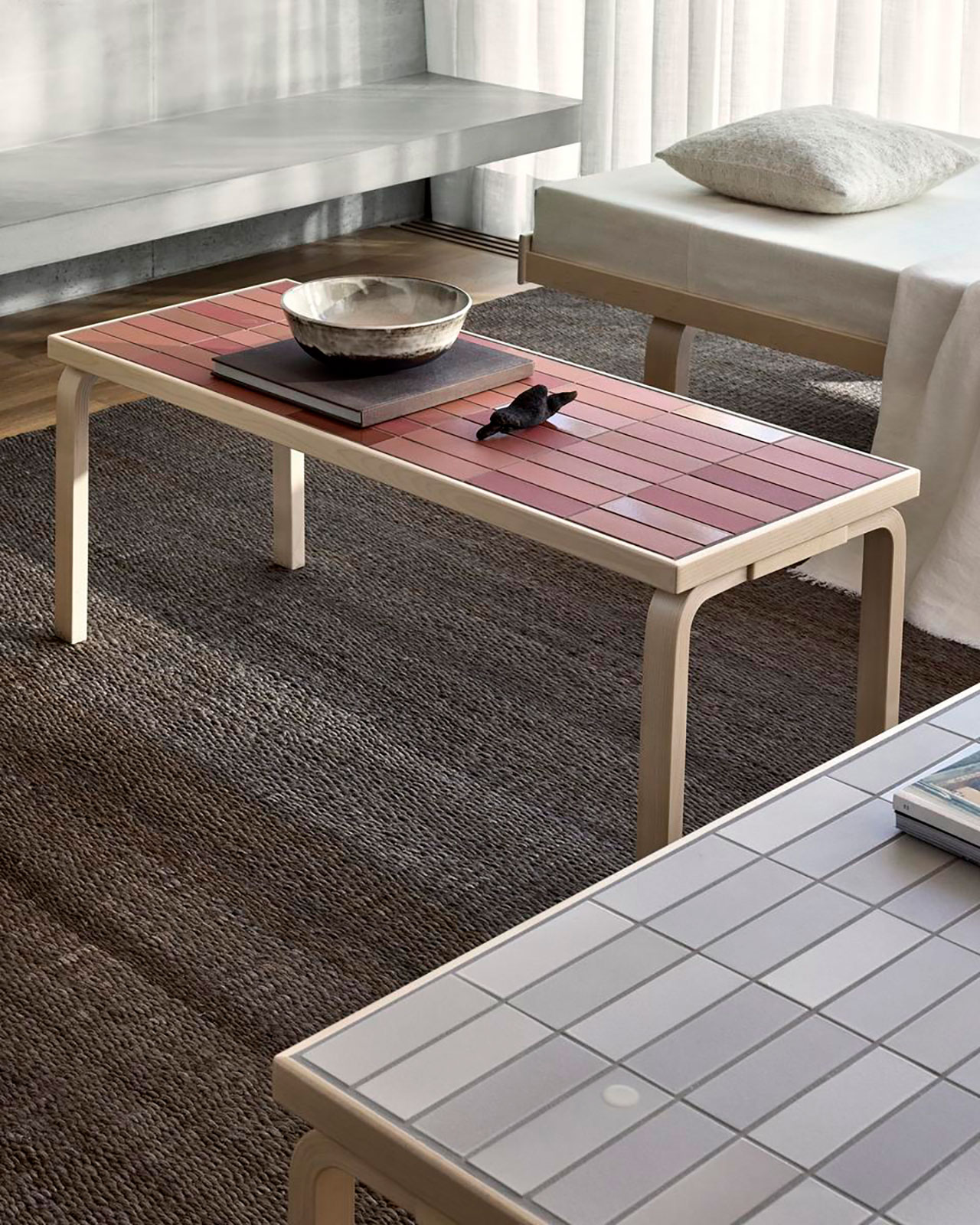
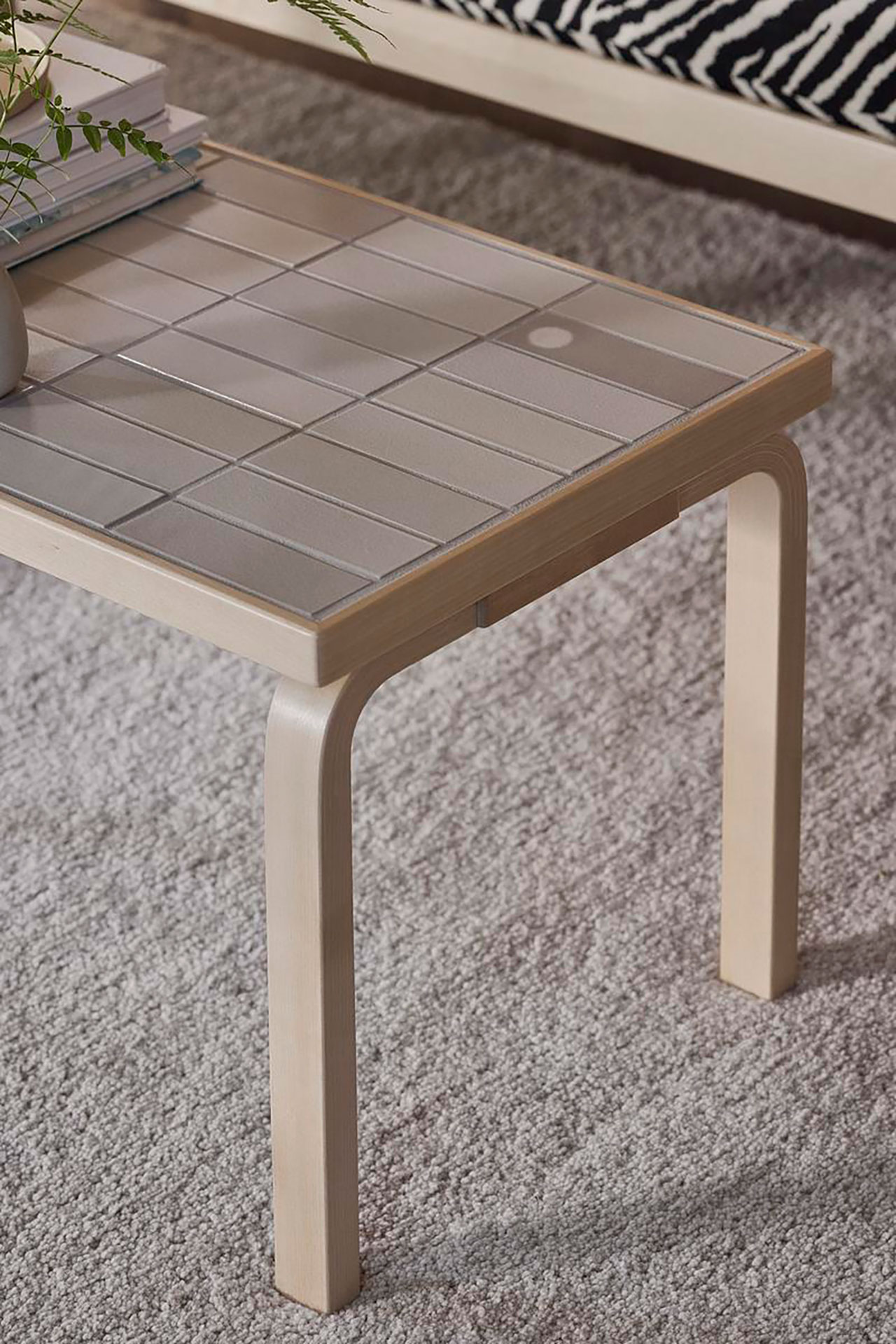
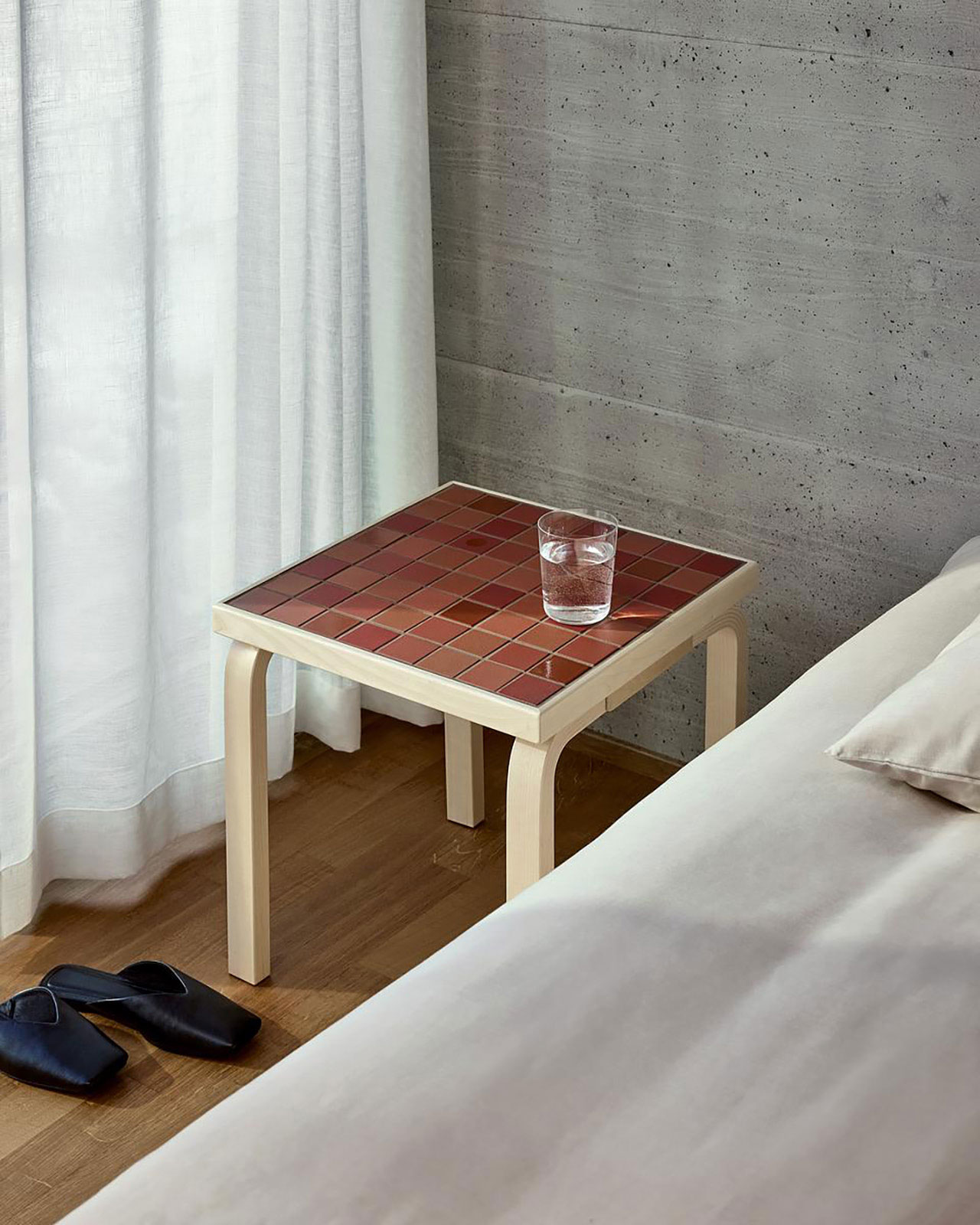
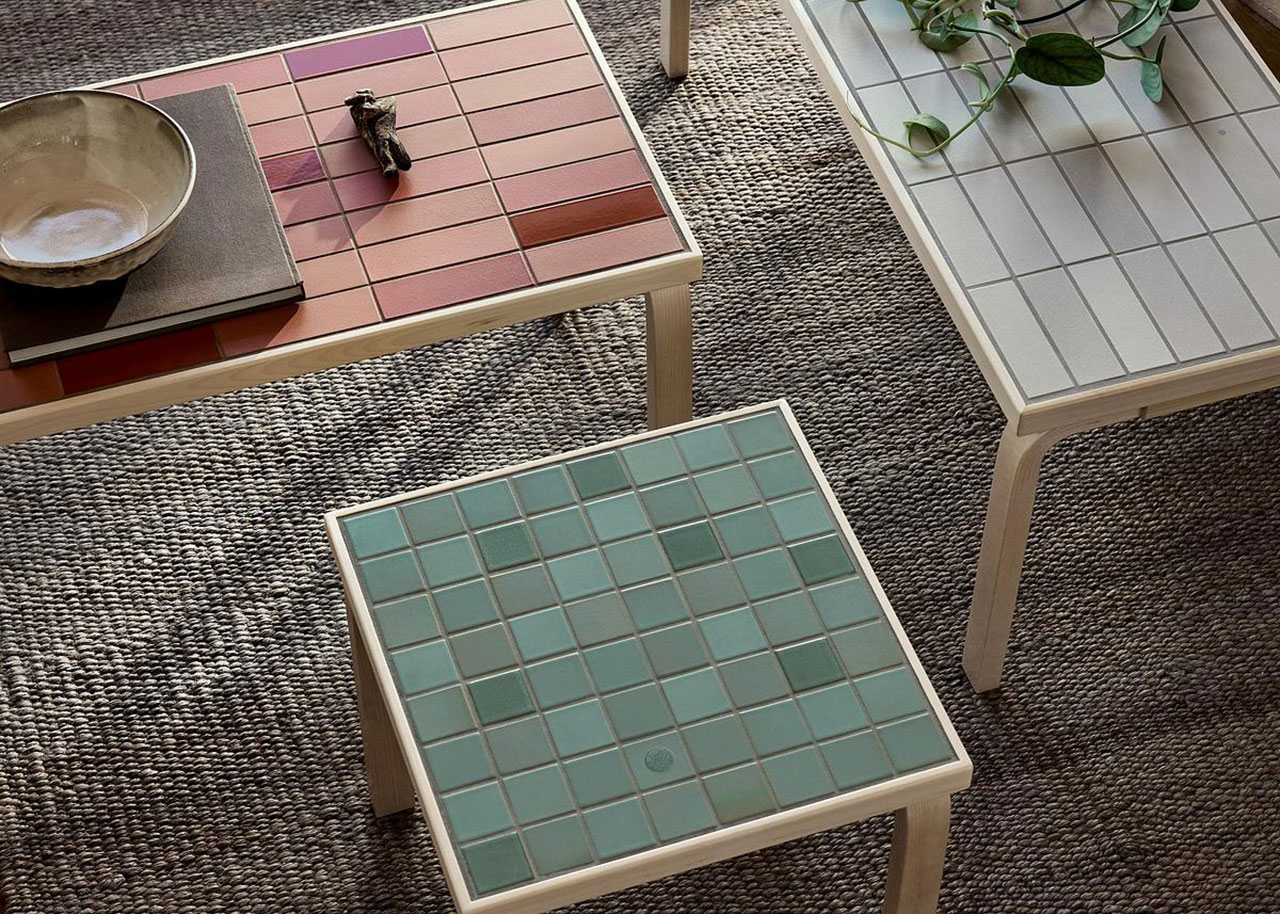
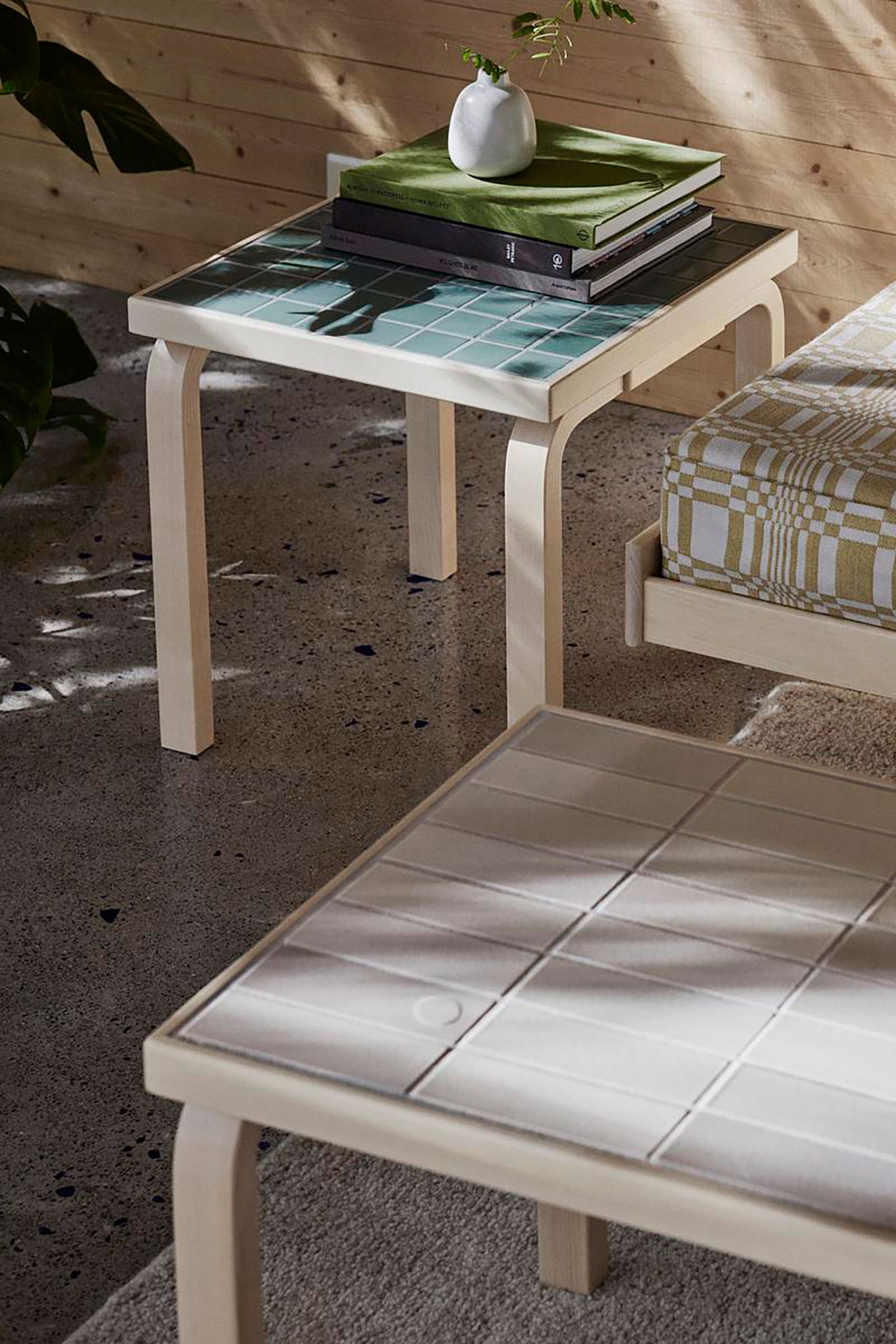
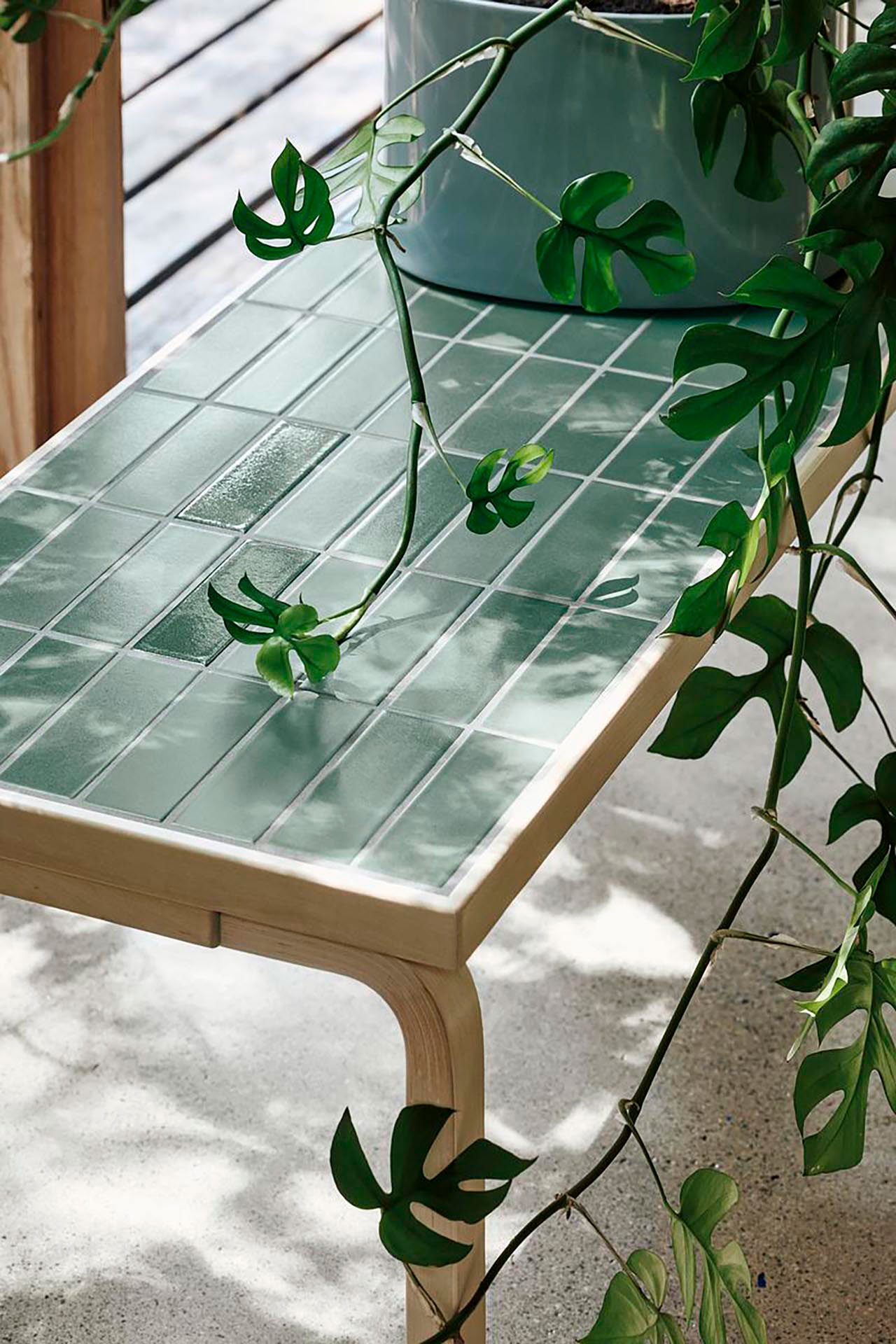
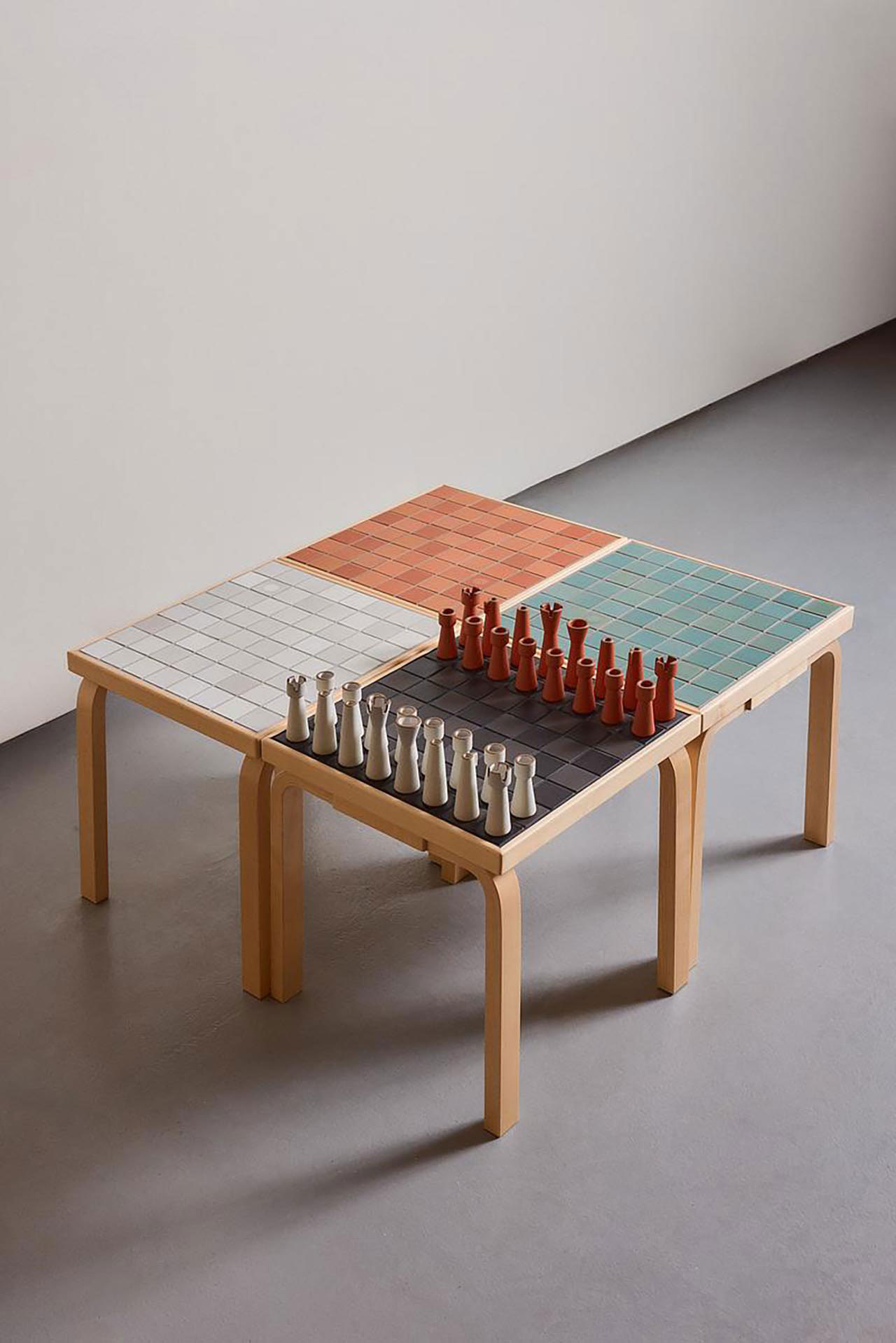

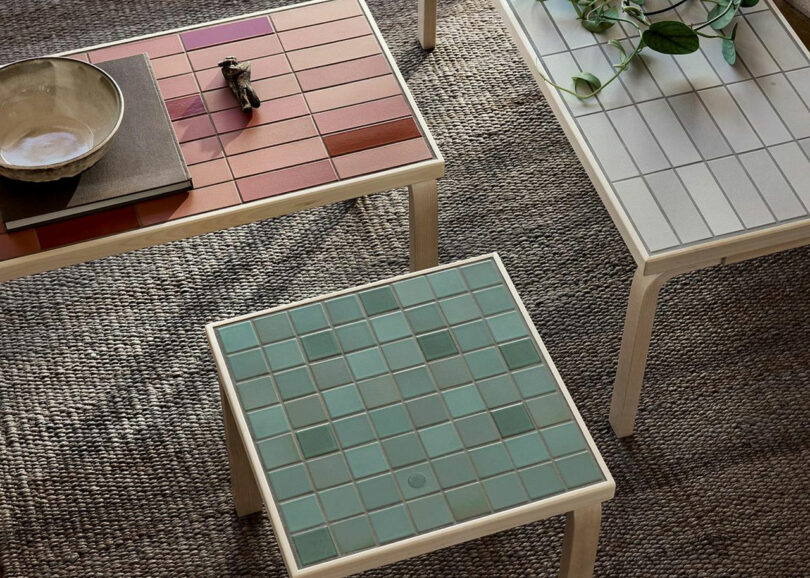
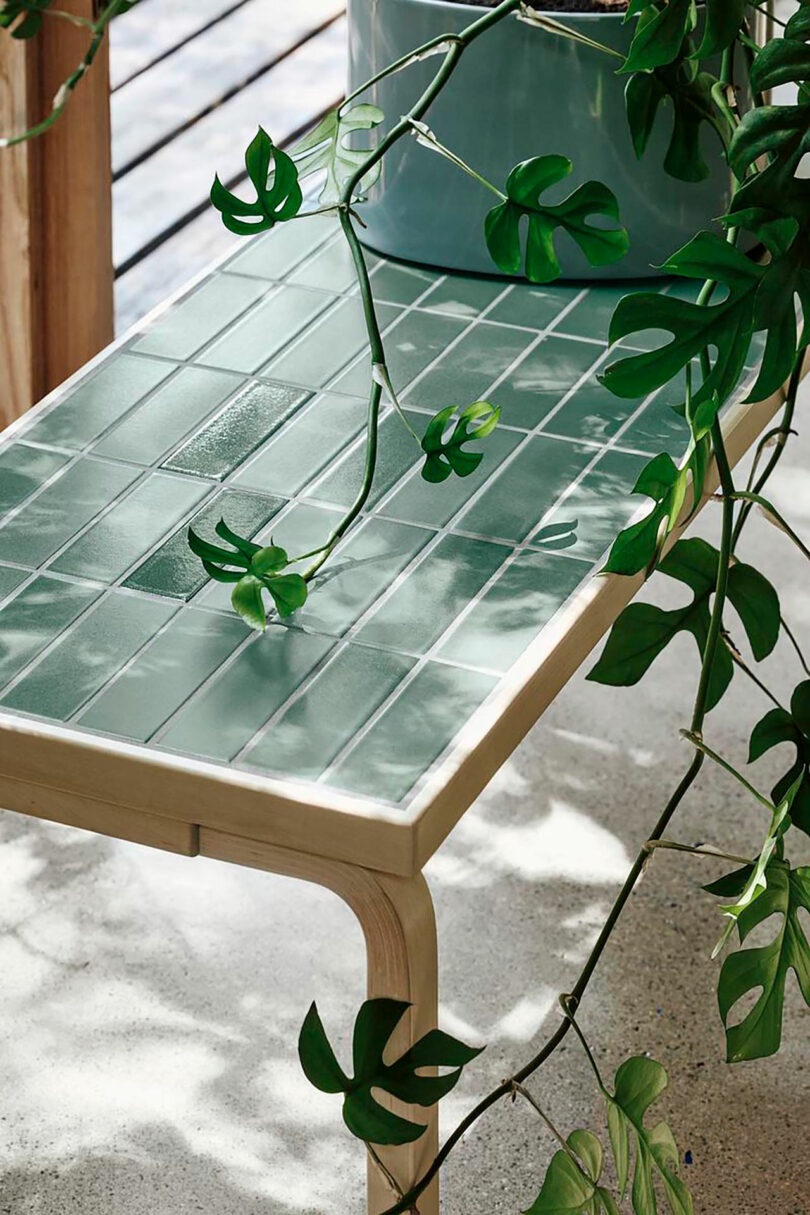
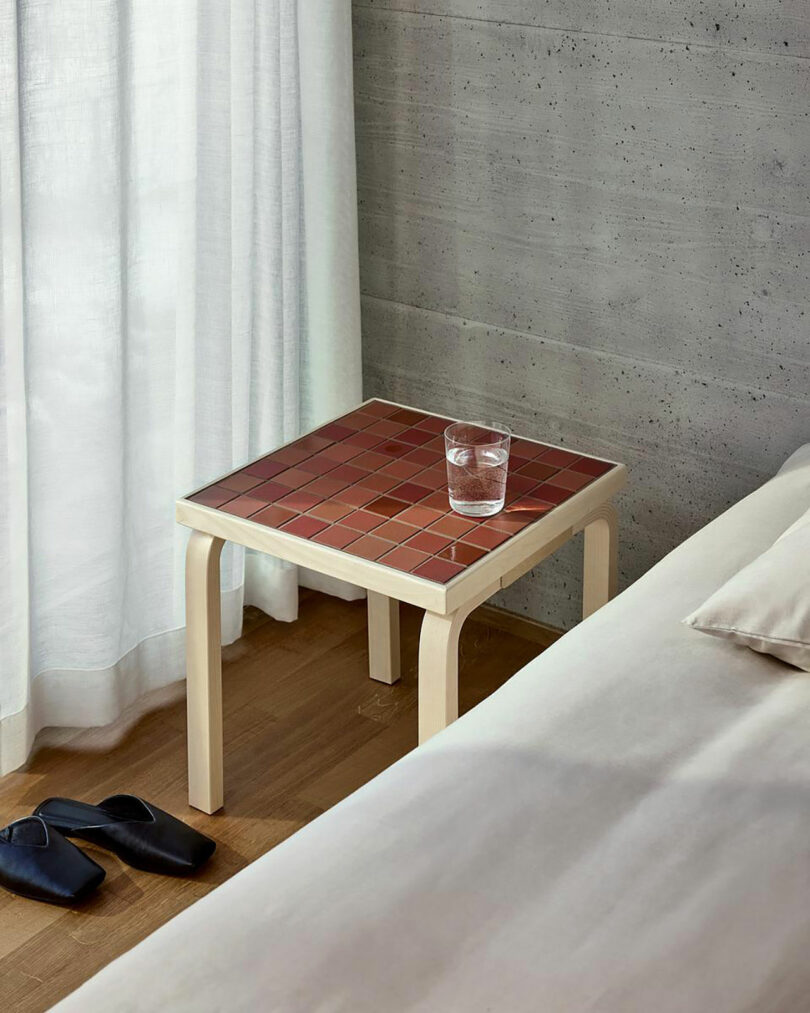
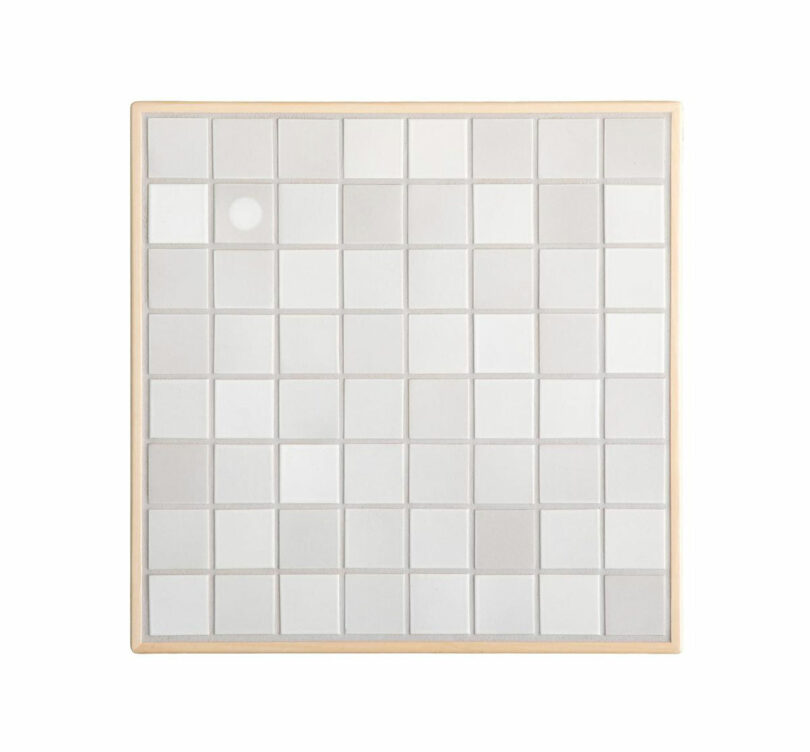
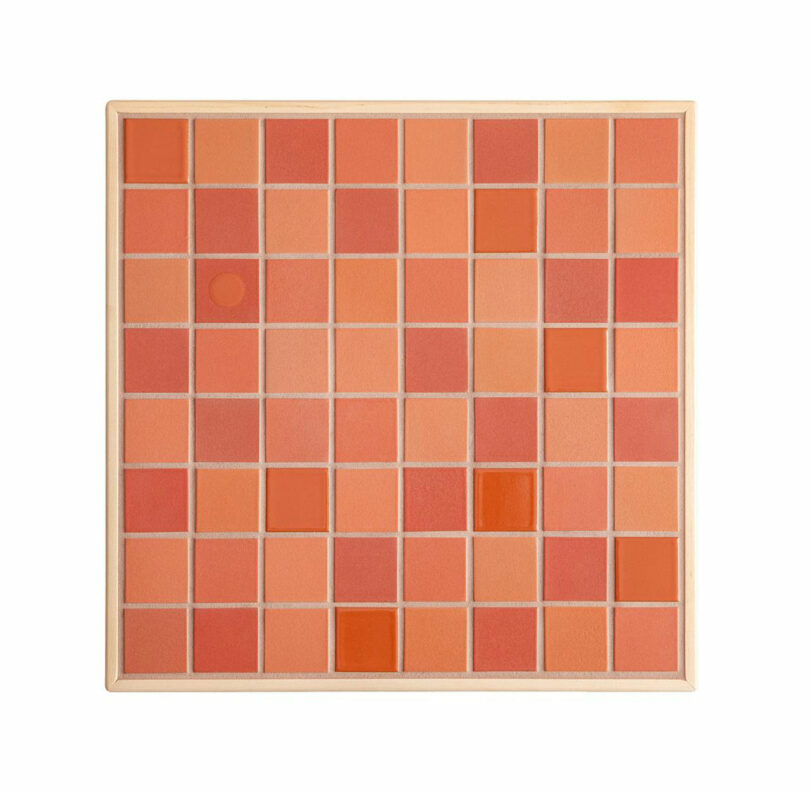
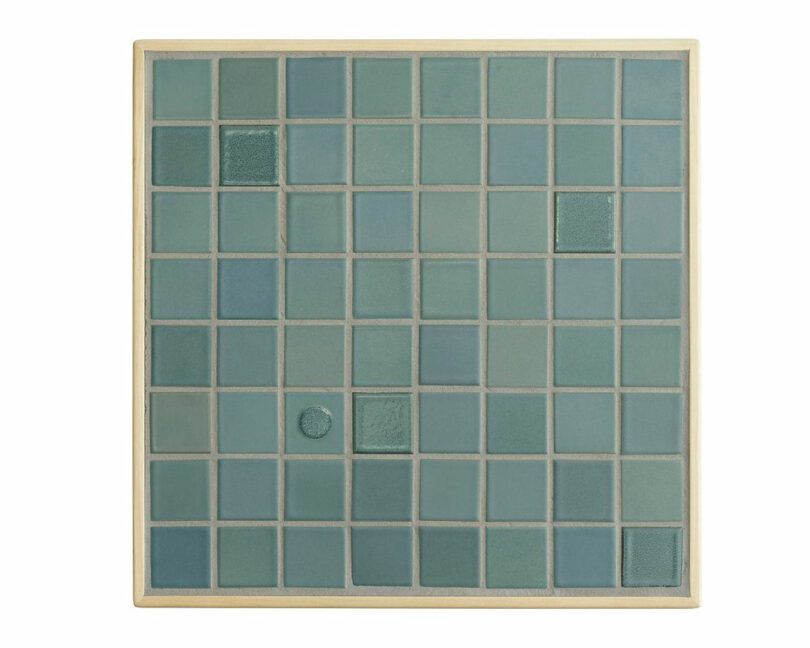
“As kindred spirits, the Artek and Heath Ceramics teams have once again come together to combine our respective crafts,” says Marianne Goebl, Artek Managing Director. “Designed as a system, the Tile Table collection encourages play and experimentation with color and texture. The results are, we believe, delightful functional companions for the home.” The refreshed offering, a first version of which debuted in 2022, is presented in a trio of signature colorways: green, white, and now terracotta red. The latter aligns well with an industry-wide return to moody hues and Art Deco embellishments. This third edition stands in the intersection between materiality, personality, and honesty – the wood simply treated, the tiles moveable to taste.
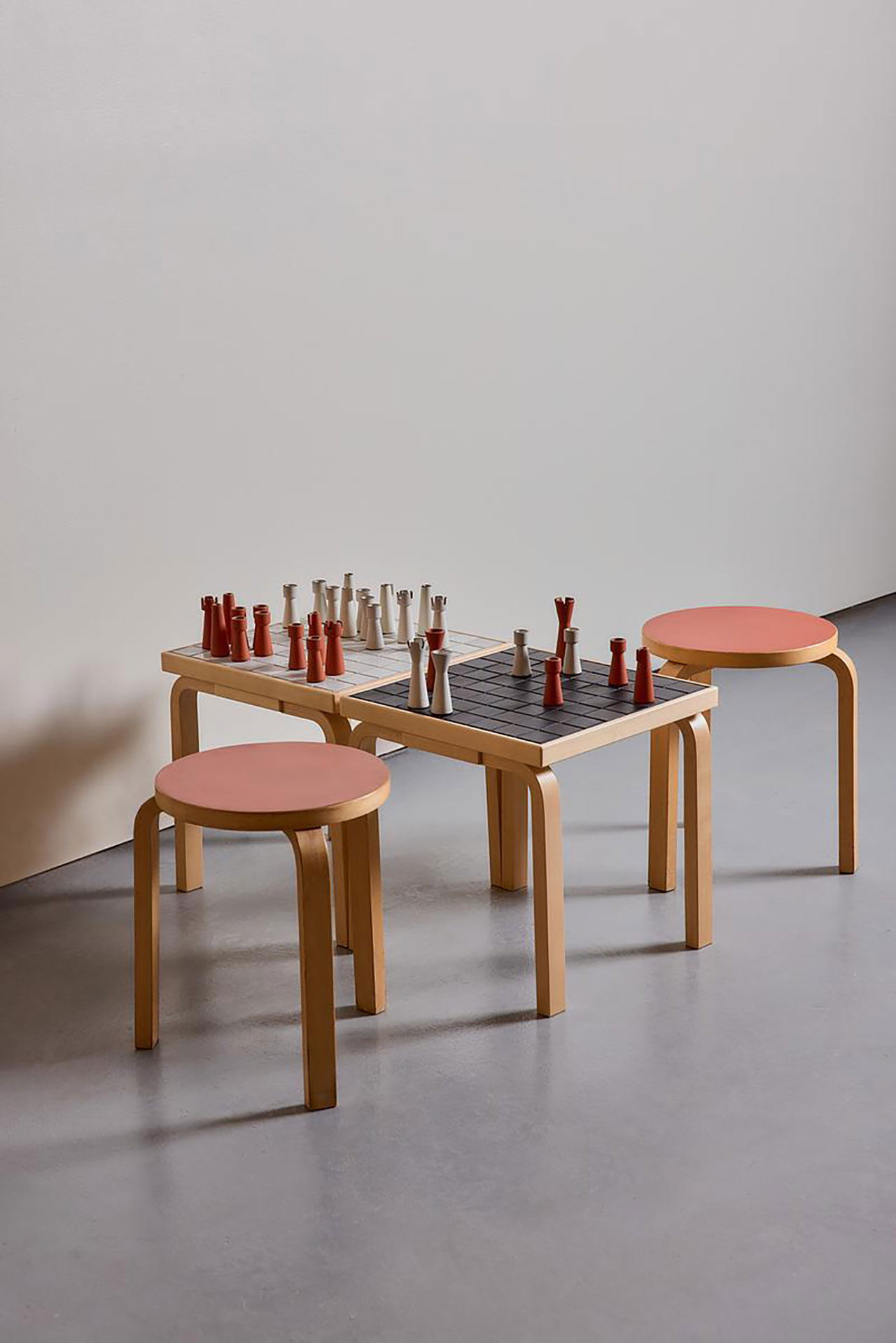
This extended proposition – the fusing of historic ceramicist Edith Heath’s deftly proportioned and toned tiles with Alvar Aalto’s Table Square—isn’t just aesthetic. The practical, durable and even hygienic application of fully glazed ceramic tiles as a table finish can’t be overlooked. One has only to consider the especially efficient and cost-effective kitchen countertops of the 1990s, replaced since by equally enduring but significantly more expensive natural stones.
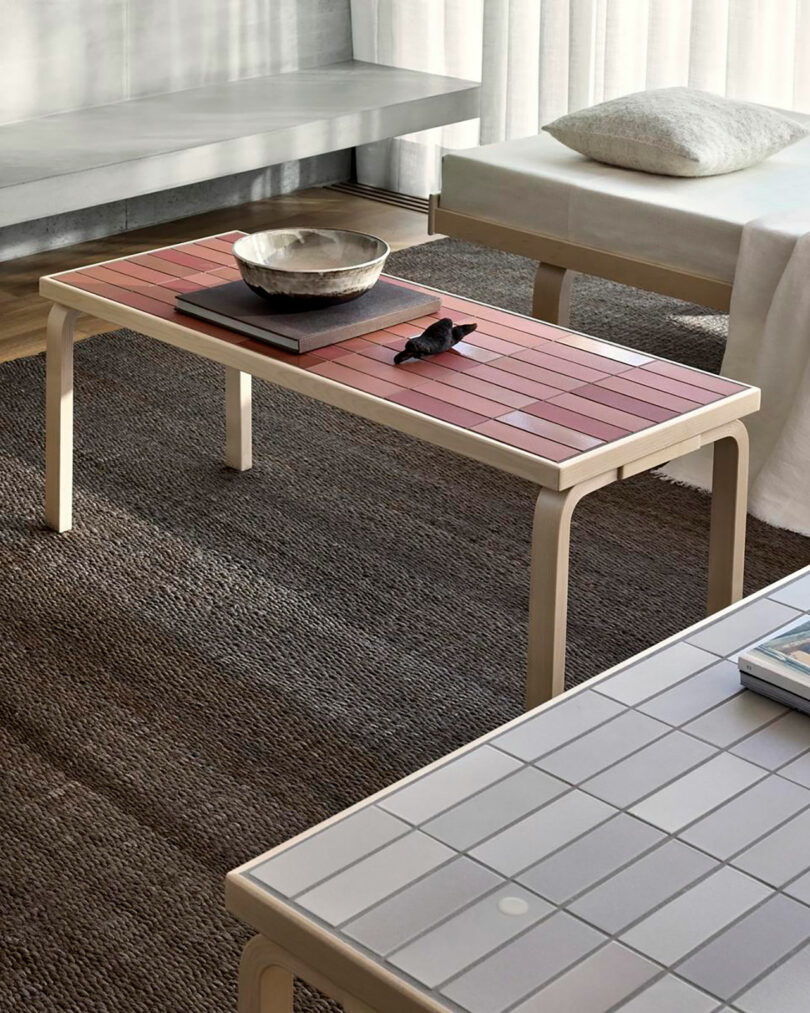
What the joining of these forces ultimately represents is the deft mirroring of values. Both boutique heritage producers rarely diverge from the central principles of beauty, utility, integrity, and longevity. New releases are almost always nuanced reinterpretations of long-appreciated classics that transcend time without necessarily becoming “timeless.” These fresh takes tend to hold fast to a long-established, underlying understanding of succinct form-finding and resolute styling that has yet to be surpassed. And any indication of national or regional attribution – what might be characterized as Finnish and Californian design – is hard to decipher. Nods to their distinct natural settings are implicit, at best. These cleverly configured and finished designs are emphatically universal; enticing on both a visceral and visual level.
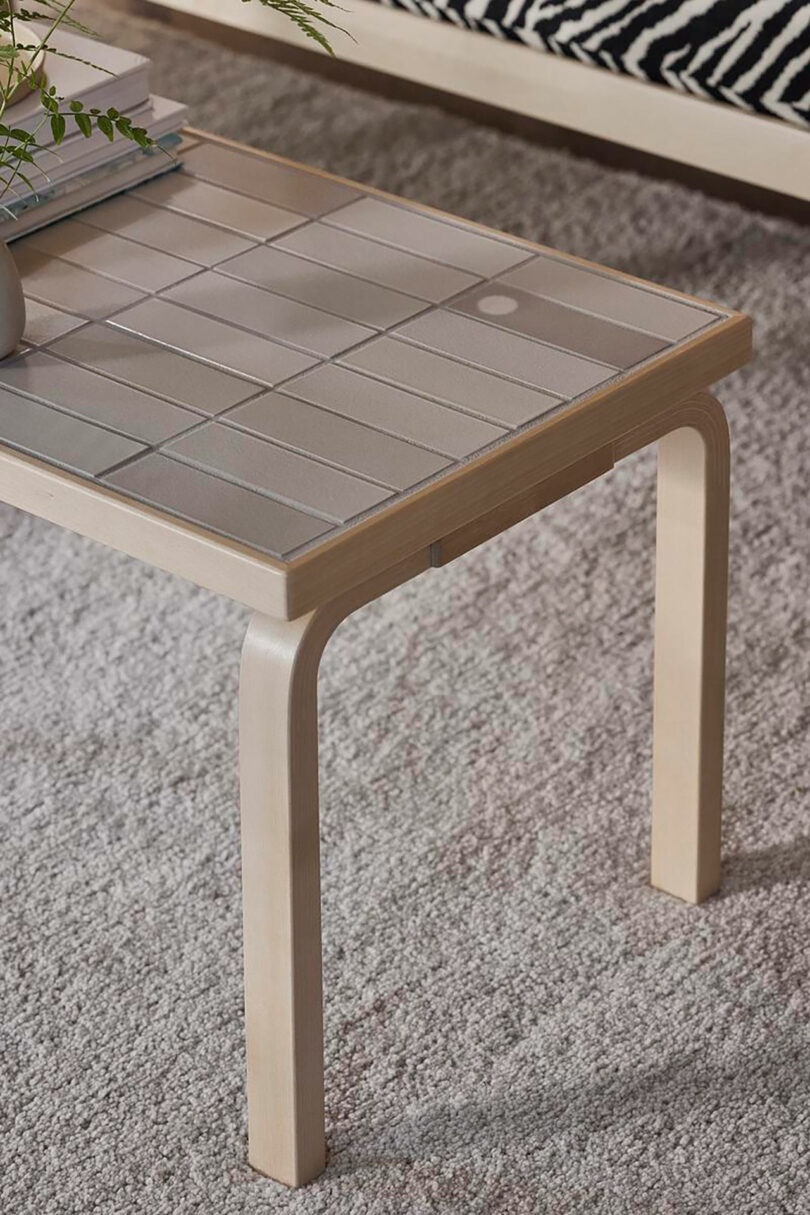
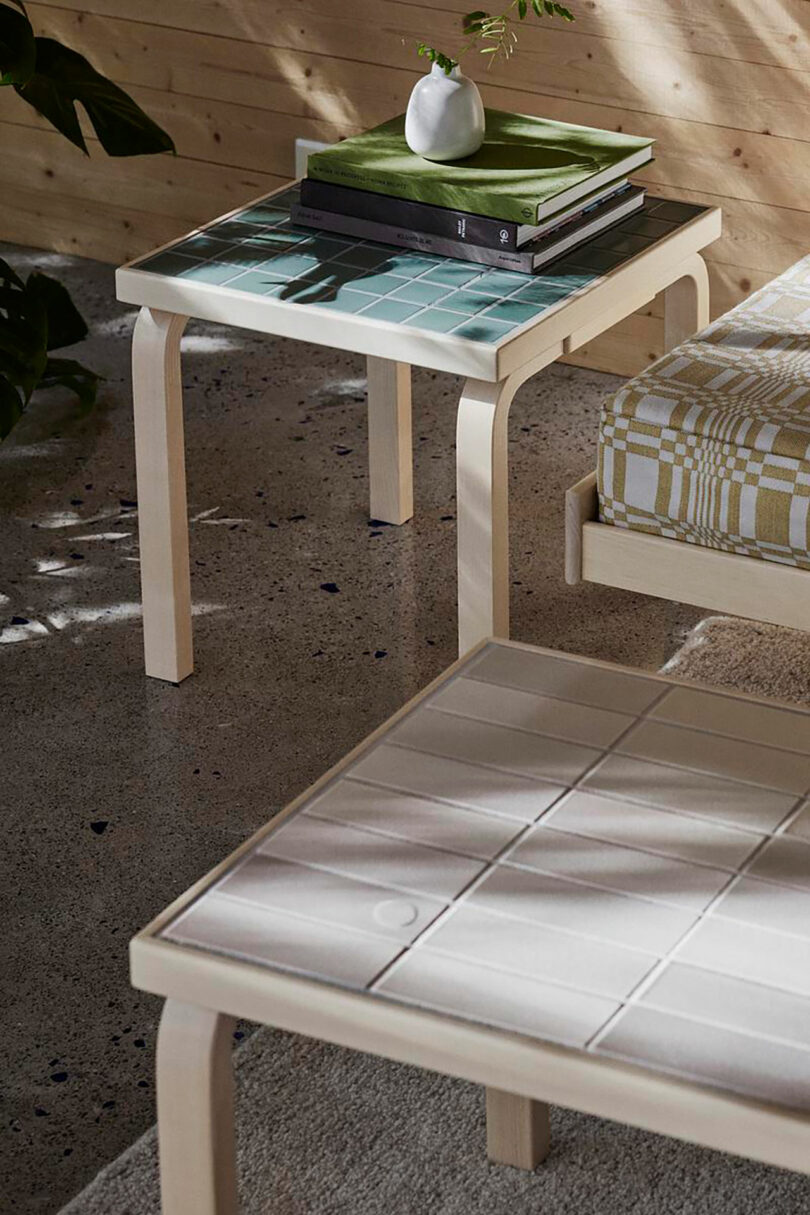
Where other brand-collabs lean bombastic and gimmicky, this collaboration makes sense. “What keeps us coming back to this [project] with Artek is a shared reverence for natural materials—clay, glaze, and wood—and how they respond to use over time,” says Heath Clay Studio Director Tung Chiang. “It’s both a creative exchange and a close friendship, rooted in the mutual love for thoughtful making.”
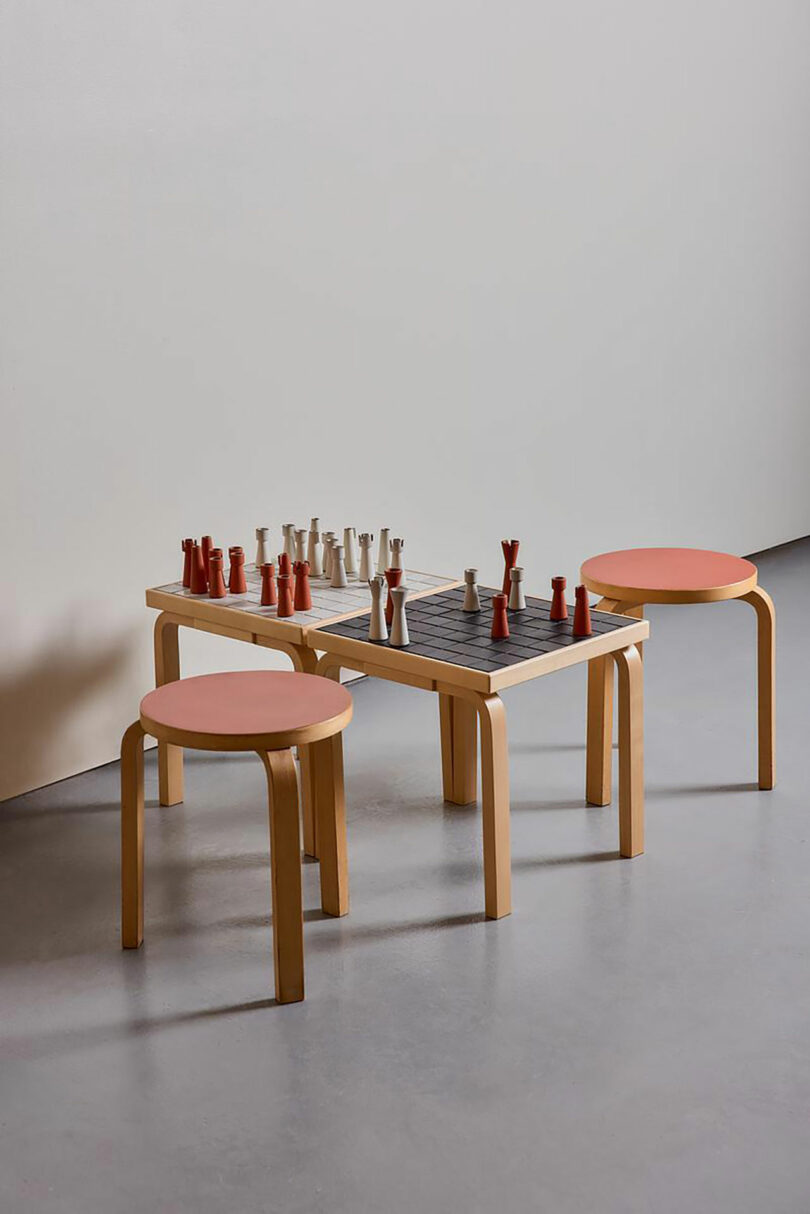
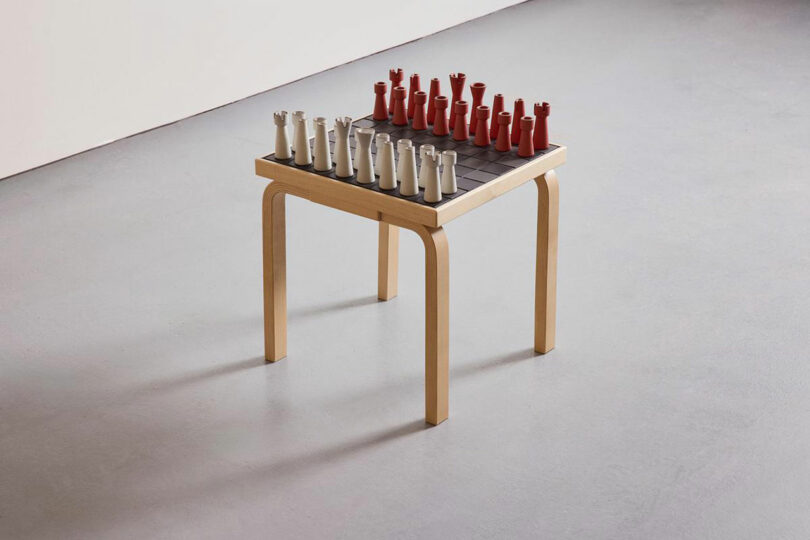
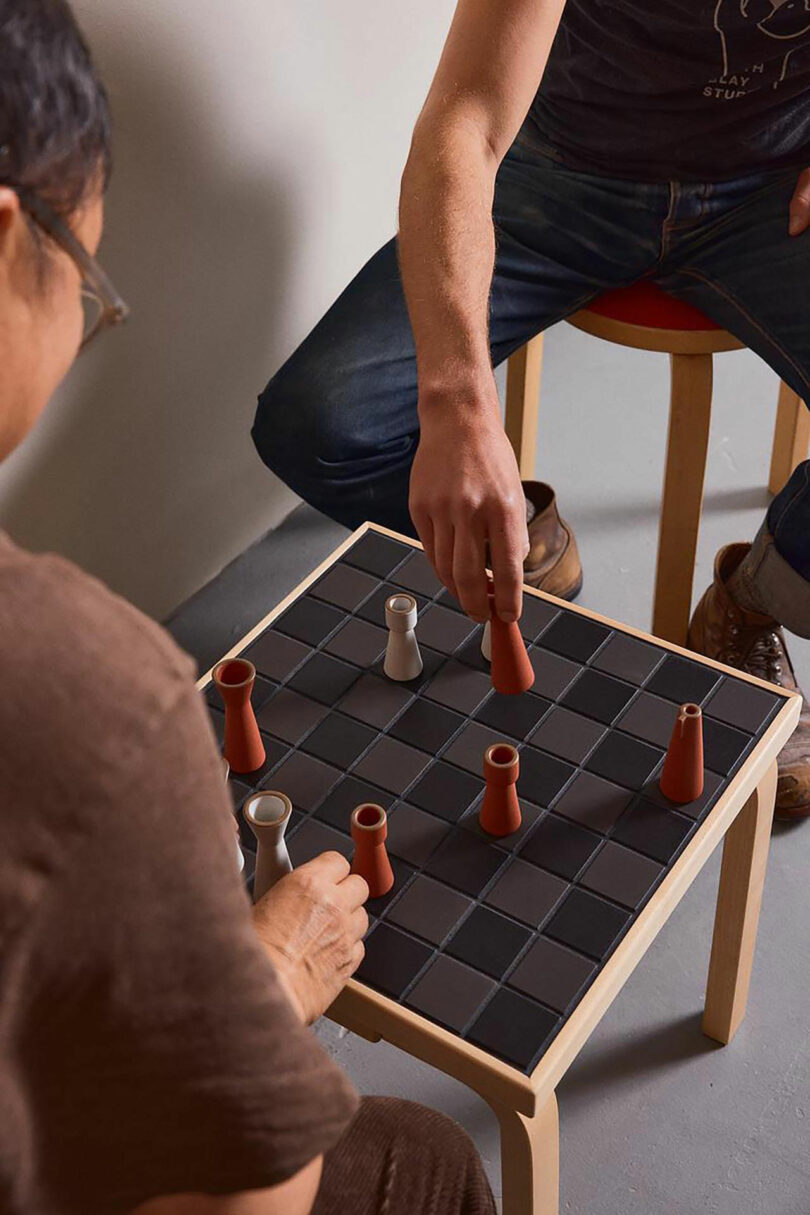
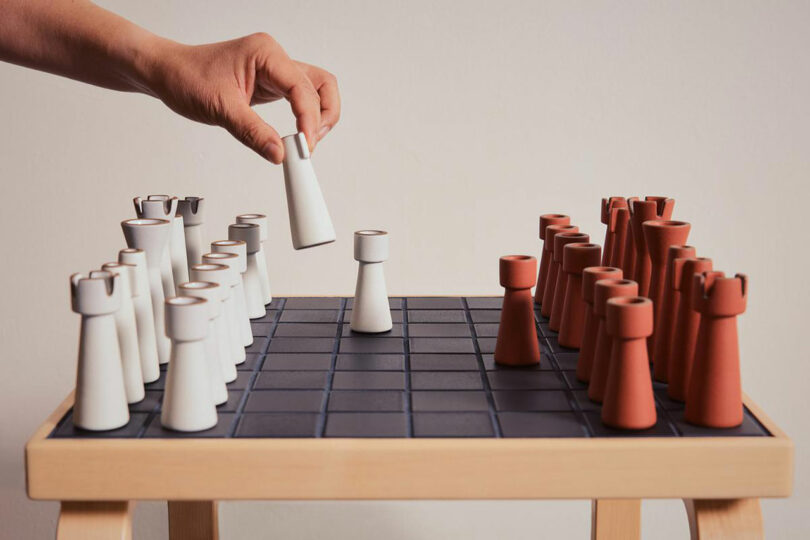
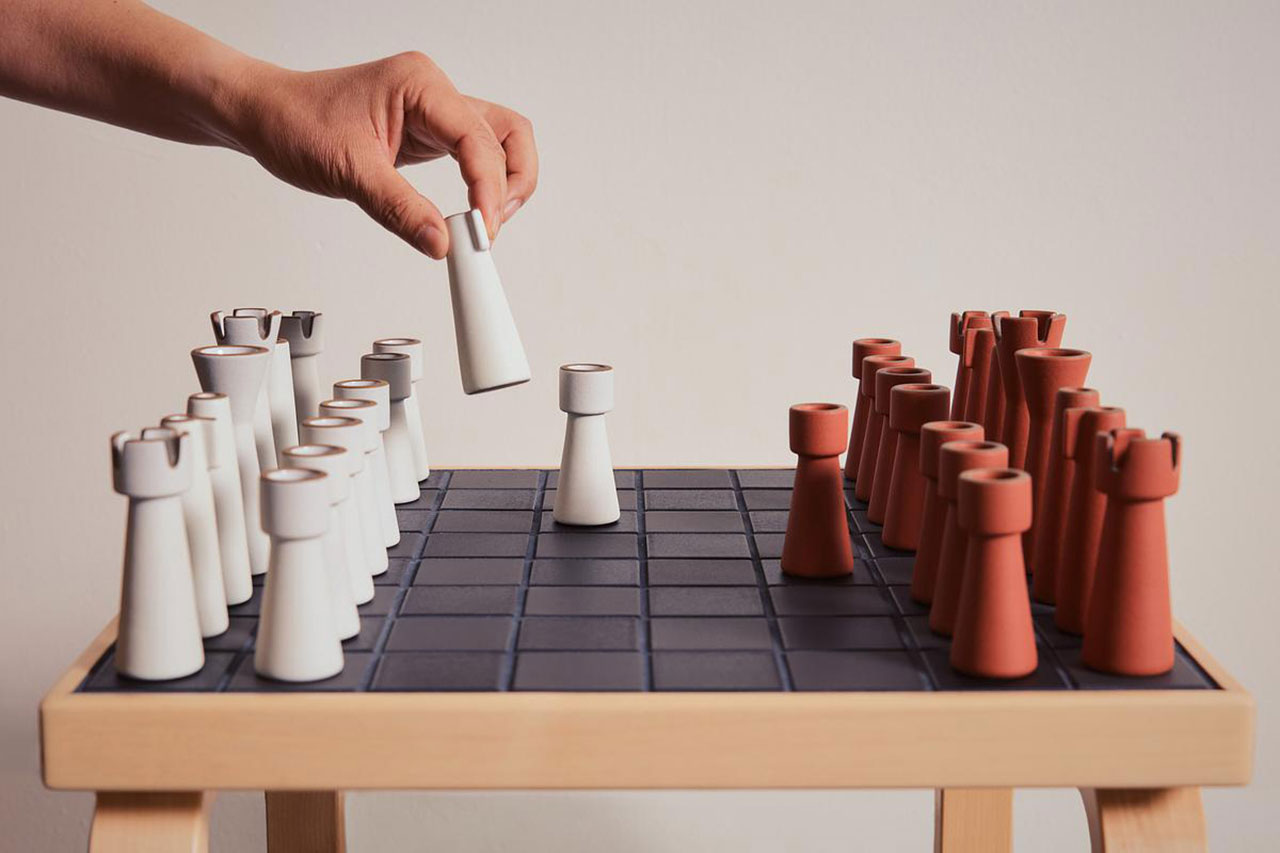
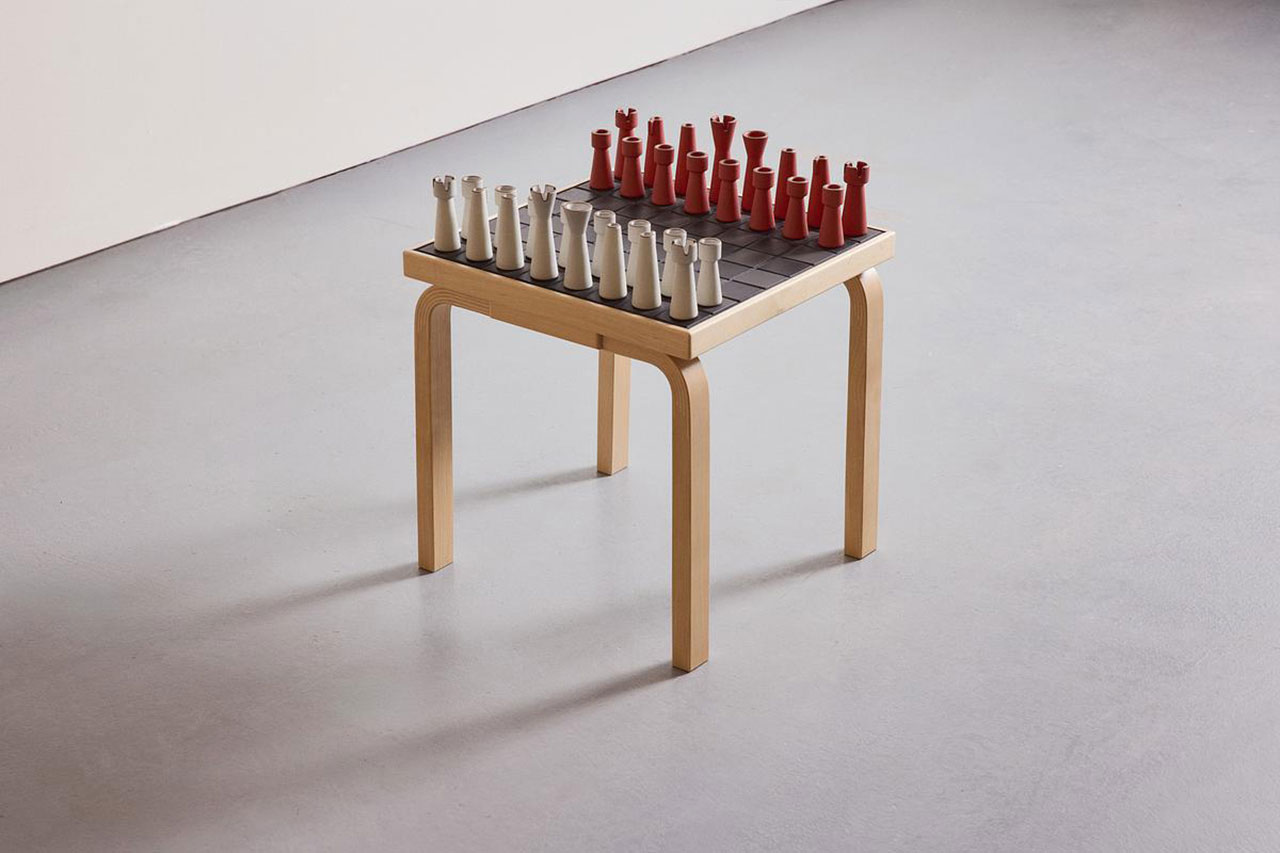
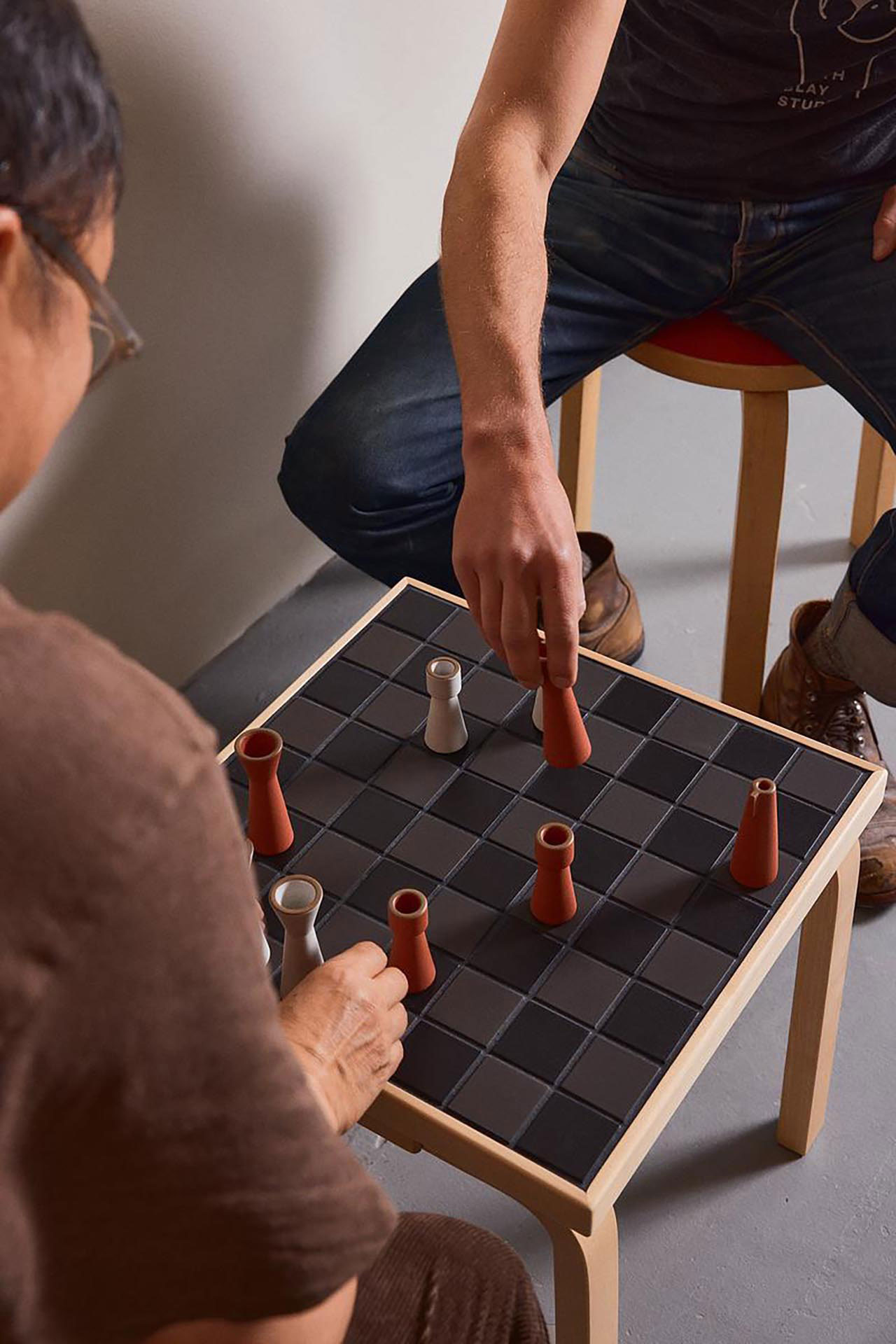
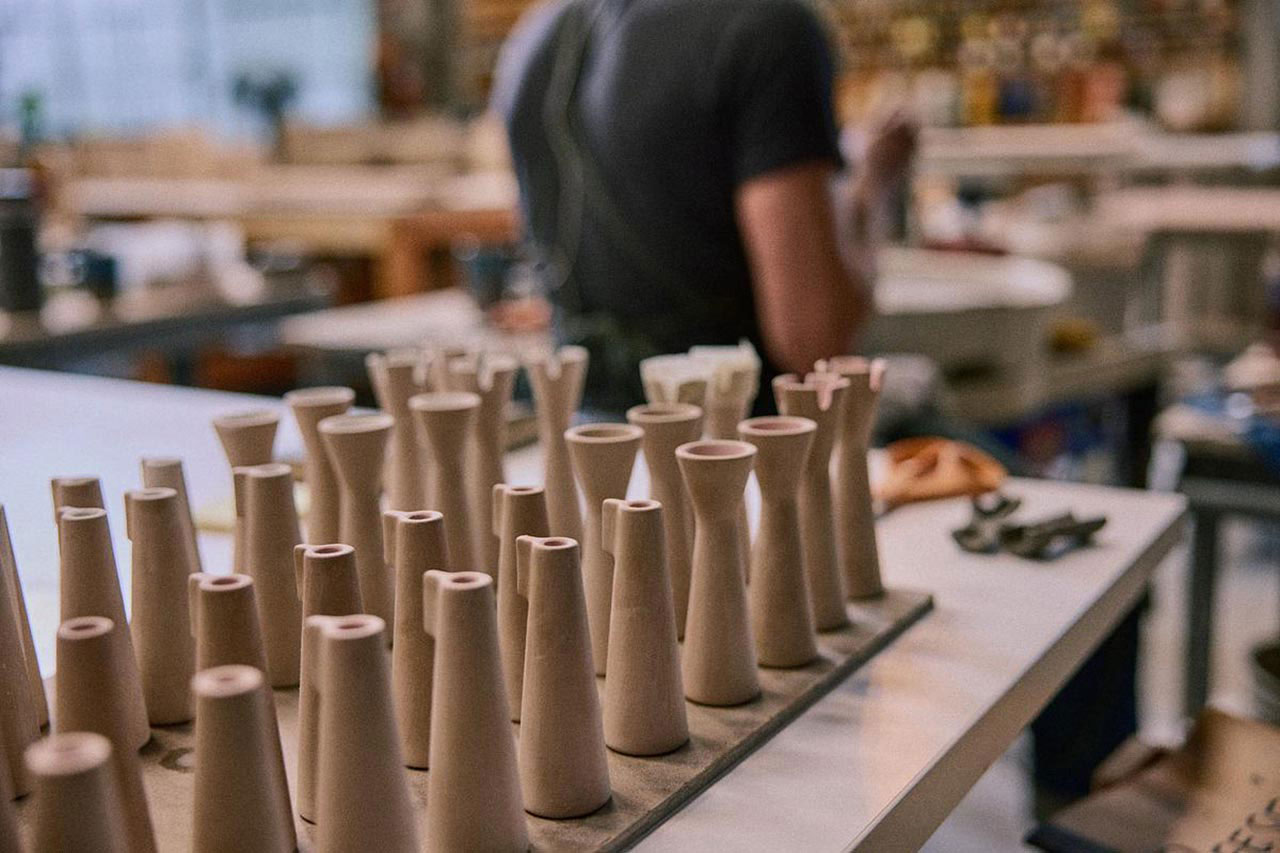
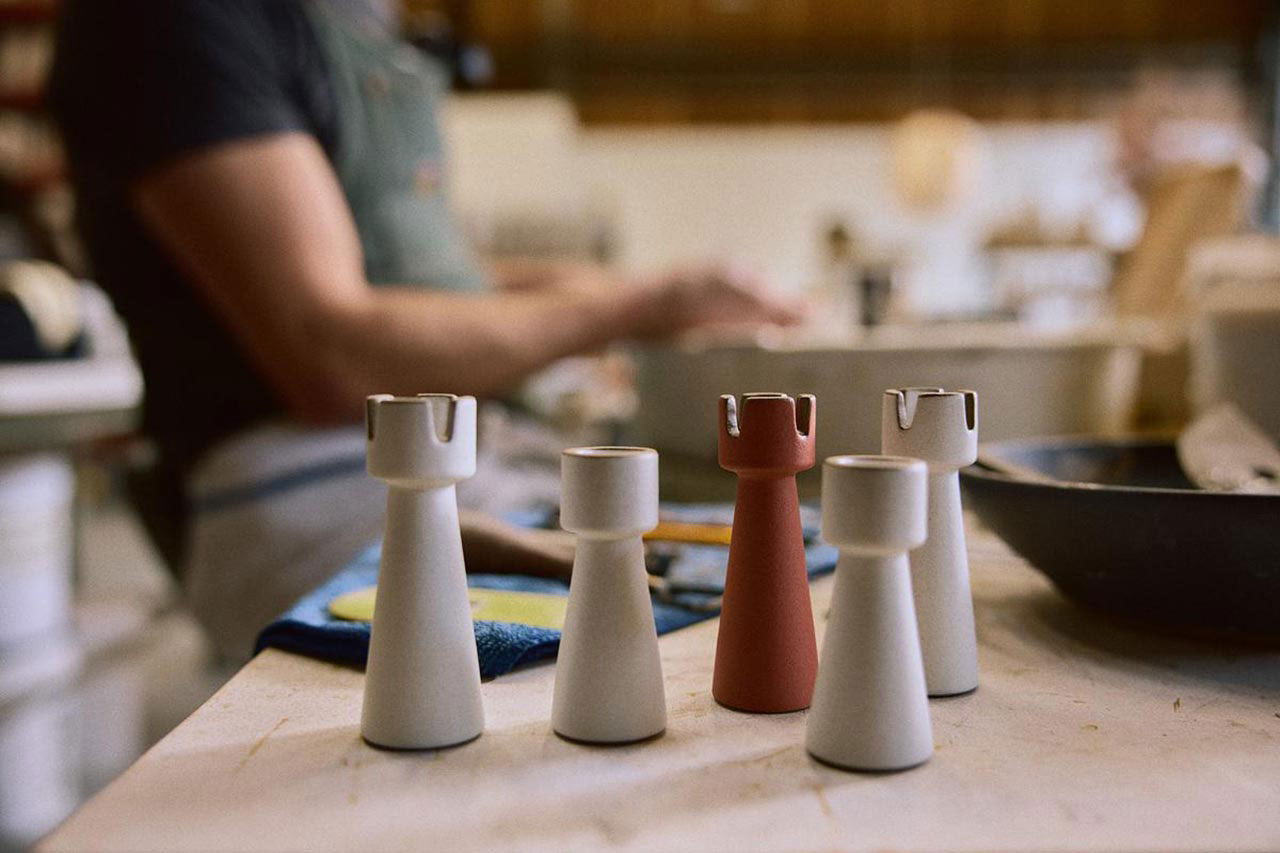
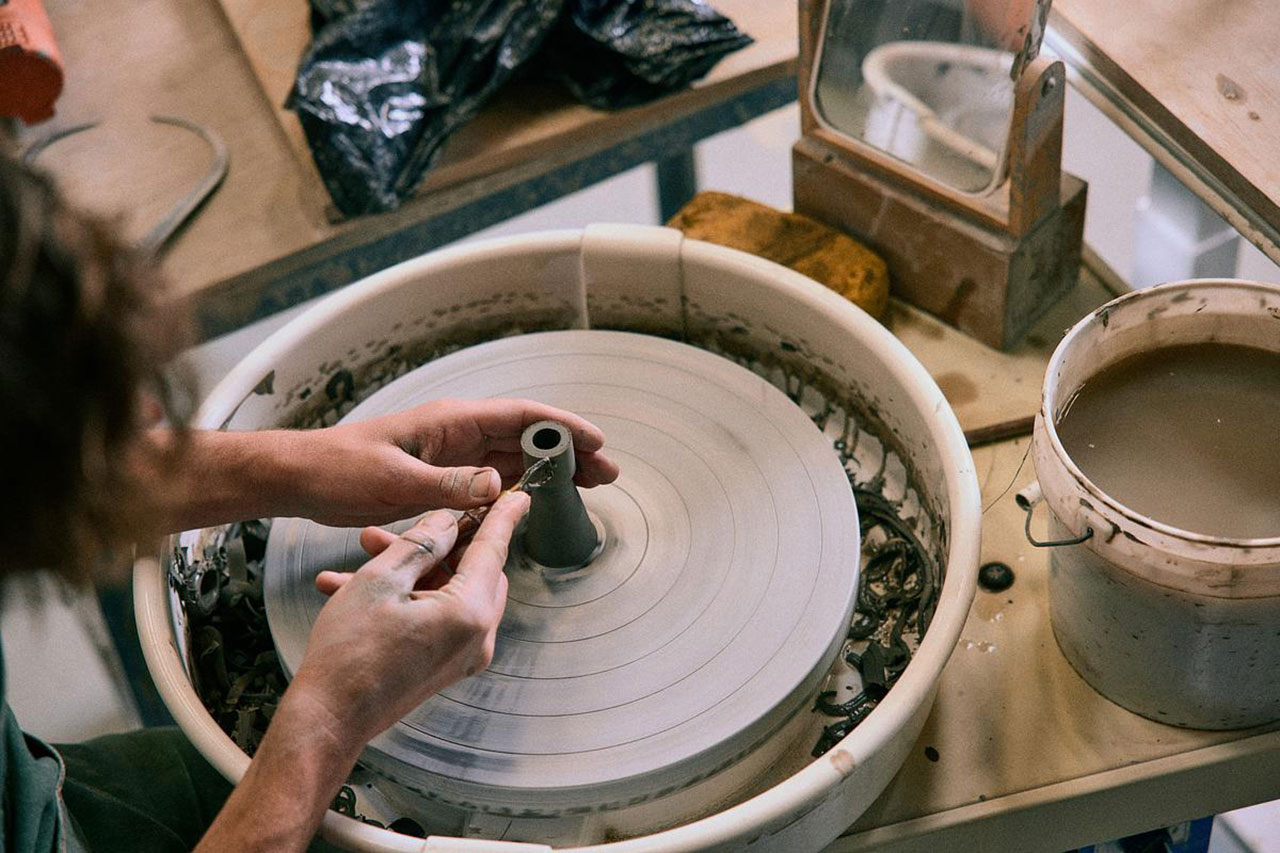
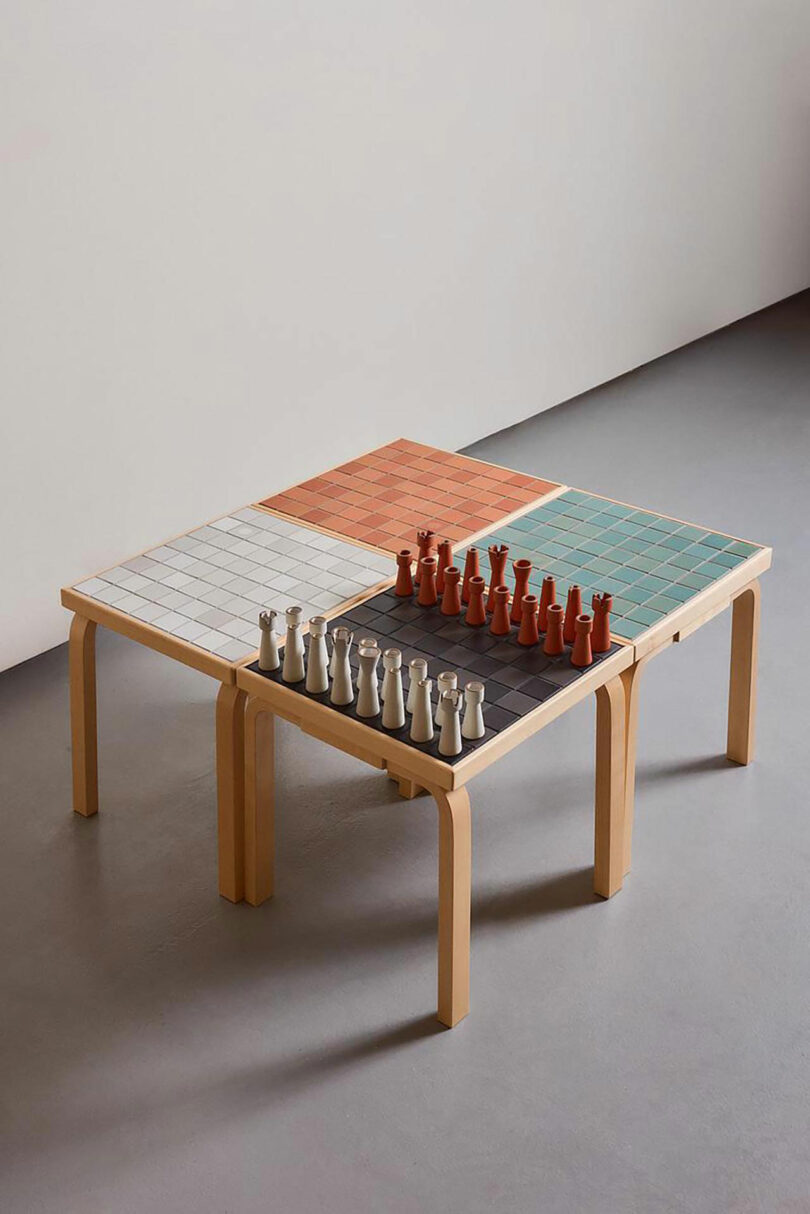
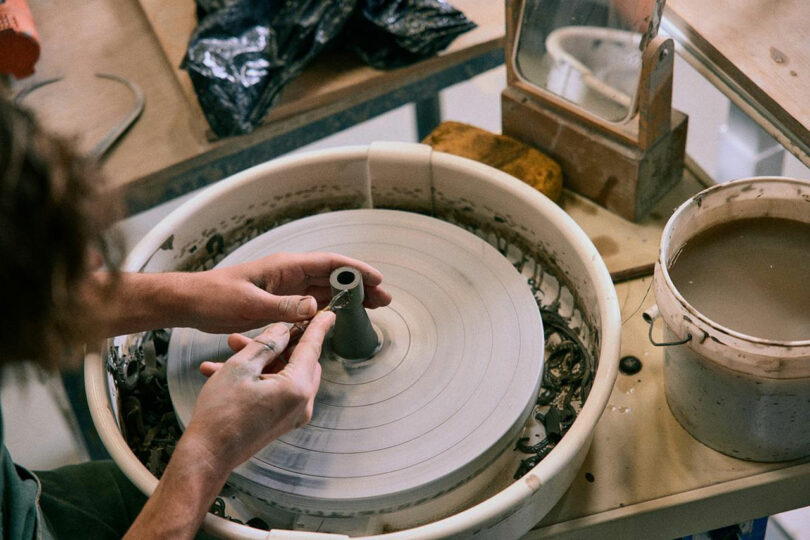
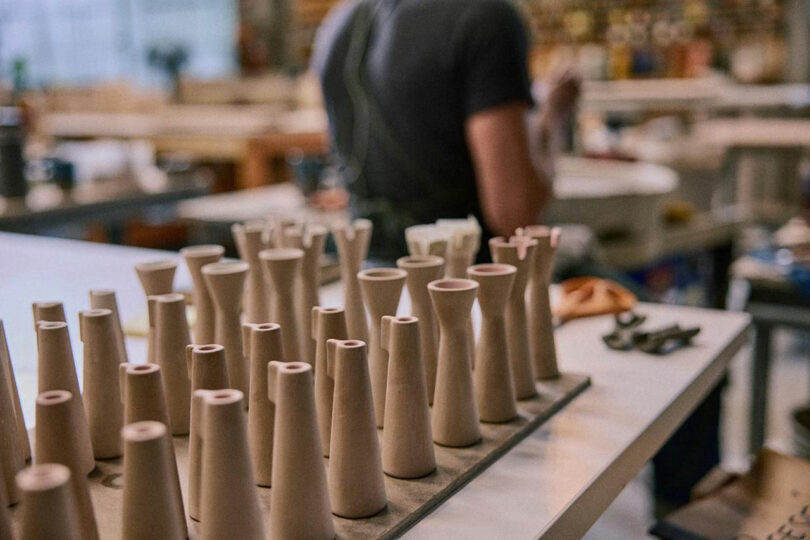
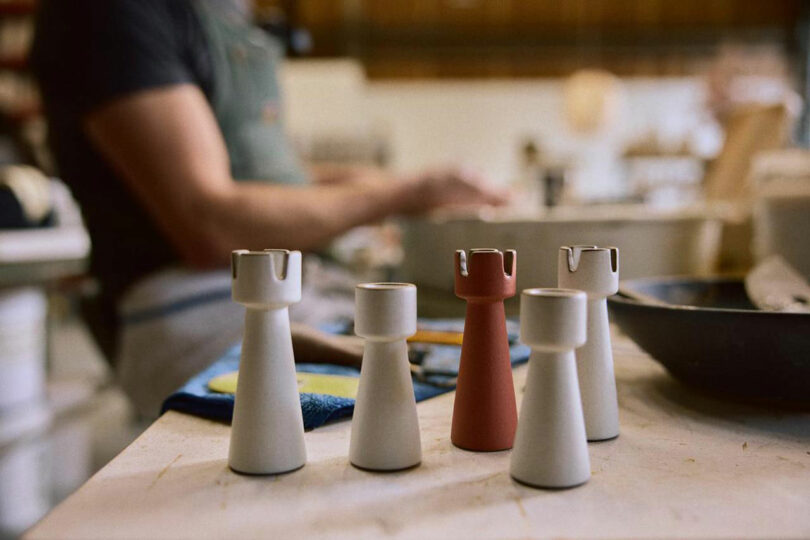
An added bonus: the Artek + Heath Chess Table. Though the brand identifies this clever application as a call back to Max Ernst chess table at Villa Mairea—designed by Aino and Alvar Aalto, this ingeniously unexpected second application seems to have naturally emerged from the coherence of tile and table typologies—an impromptu game board with segmented tiles doubling as chessboard files. To mark the moment, hand-thrown and hand-glazed ceramic chess pieces were imagined according to the previously outlined philosophy. The possibilities of pattern configuration and unexpected function are ostensibly, endless.

To learn more about the brands involved in this spirited collaboration, visit artek.fi and heathceramics.com.
Photography courtesy of Heath Ceramics.